Containerization Basics
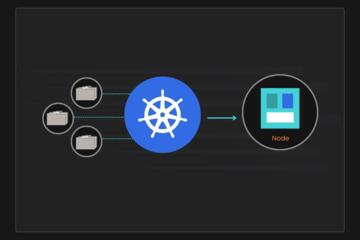
Containerization packages software and its dependencies into isolated environments, making applications portable across different systems. Docker, launched in 2013, popularized this by providing a platform to build and run containers. Kubernetes emerged later in 2014 as an open-source system to orchestrate containers across clusters, managing scaling and failover. As of early 2024, Docker Hub hosts over 8 million container images, evidencing widespread adoption.
For instance, a fintech startup used Docker to run microservices independently on developer laptops and production, avoiding the ""works on my machine"" problem.
Simply put: containers bundle code, runtime, and system tools. Kubernetes schedules those bundles, ensuring they run smoothly on a cluster. These tools eliminate environment inconsistencies and accelerate deployment cycles.
Container Workflows Issues
Many teams confuse containers with virtual machines, leading to oversized images and inefficient resource use. This misunderstanding causes longer start times and bloated deployments.
Another hurdle lies in container orchestration complexity. New users underestimate Kubernetes’ learning curve, sometimes misconfiguring load balancing or scaling triggers, leading to downtime. For example, hitting the default pod limit without horizontal autoscaling configured causes performance bottlenecks.
Mismanaged container images also pose risks—outdated versions with security flaws frequently appear in registries, leaving production vulnerable.
Deployment scripts often neglect health checks, resulting in broken containers going unnoticed until manual intervention. This issue is amplified when logs are scattered and hard to correlate across multiple containers.
Effective Container Strategies
Optimizing Docker Images
Start by choosing minimal base images such as Alpine Linux which reduces image sizes to less than 10MB. Use multi-stage builds to compile code separately from runtime, cutting down unnecessary layers. This approach decreases build time by up to 30% and speeds up container startup.
Configuring Kubernetes Pods
Declare pod resource requests and limits to prevent noisy neighbors and unmanaged scaling. Implement liveness and readiness probes to trigger automatic restarts or deployments only when containers are verified healthy. These are crucial to maintaining uptime and smooth rollouts.
Using Namespace and RBAC
Isolate workloads per project or team using namespaces. Manage access with Role-Based Access Control (RBAC) to minimize security risks from overly permissive cluster access, a common oversight in corporate setups.
Automating CI/CD Pipelines
Integrate container builds and deployments into CI/CD tools like Jenkins or GitLab CI. Automated pipelines detect build failures early and push containers only after passing tests. In practice, continuous deployment reduced a client’s release cycle from once a month to twice a week.
Securing Container Images
Scan images regularly with tools like Clair or Trivy for vulnerabilities. Automate scans in your registry workflow and update base images monthly or sooner if critical patches appear. This discipline avoids security incidents in production environments.
Efficient Storage Solutions
Use Kubernetes Persistent Volumes (PV) and StatefulSets for stateful applications requiring stable storage. Avoid storing data inside ephemeral containers, as Kubernetes pods can restart unexpectedly, losing unsaved data.
Monitoring and Logging
Deploy monitoring stacks like Prometheus and Grafana, along with centralized logging systems like Elasticsearch-Fluentd-Kibana (EFK). Aggregate metrics and logs to quickly identify issues in distributed containerized systems.
Choosing the Right Network Model
Decide on CNI plugins (Calico, Flannel, etc.) based on network policy needs and complexity. Without proper network segmentation, pods from different teams might unintentionally communicate, which is a security risk.
Real-World Examples
Case 1: A SaaS company struggled with scaling customer onboarding services manual redeployments. They switched to Kubernetes with autoscaling enabled, cutting response times by 40%. The Kubernetes cluster ran on Google Kubernetes Engine (GKE) with node pools optimized for their workload types.
Case 2: An e-commerce platform encountered frequent downtime caused by dependency conflicts between microservices. Docker multi-stage builds and image version pinning stabilized builds and improved deployment frequency from 2 to 10 per day.
Key Container Features
| Feature | Docker | Kubernetes | Use Case |
|---|---|---|---|
| Purpose | Container runtime | Orchestration & scaling | Build vs Manage Containers |
| Resource Control | Basic limits | Fine-grained quotas | Scaling & Scheduling |
| Networking | Basic bridge/net | CNI plugins support | Policy, segmentation |
| Scaling | Manual start/stop | Auto horiz. scaling | Load-based scale |
| Storage | Volumes & bind mount | Persistent volumes | Stateful services |
| Security | User namespaces | RBAC, networkpolicy | Cluster security |
Container Pitfalls to Skip
Running containers as root is a frequent security hole, avoid it by setting user directives in Dockerfiles. Also, mixing large monolithic images fails to isolate faults; smaller, single-purpose images reduce risks.
Assuming Kubernetes config is a one-time task leads to outdated manifests cluttered with dead code, creating confusion—I’ve seen teams stuck using deprecated APIs well past support.
Another screw-up involves neglecting node resource usage, causing pods to compete and degrade all workloads unexpectedly. Monitoring this avoids noisy neighbor problems.
FAQ
What is containerization?
It is the process of packaging an application with its dependencies into a container, allowing consistent execution across different computing environments.
How does Docker differ from Kubernetes?
Docker creates and runs containers, while Kubernetes manages clusters of containers, handling automation tasks like scaling and updates.
Can I run Kubernetes without Docker?
Yes. Kubernetes supports other container runtimes like containerd and CRI-O as Docker deprecation in Kubernetes began around v1.20.
How do I secure my containers?
Use minimal base images, scan regularly for vulnerabilities, limit privileges, and apply network policies in orchestration platforms.
What tools help with monitoring containers?
Prometheus for metrics collection, Grafana for visualization, and centralized logging stacks like EFK are common choices.
Author's Insight
Years ago, I underestimated container orchestration complexity and lost valuable time fiddling with configs. Now I treat Kubernetes manifests as living documents, continuously improved. Multi-stage builds saved me countless wasted cycles building bloated images. I also rely heavily on automated scans; catching vulnerabilities early is non-negotiable. Containers brought speed but also a new layer of ops discipline.
Final Thoughts
Containerization with Docker and Kubernetes reshapes software delivery but demands careful planning. Focus on building lean images, configuring pods diligently, automating pipelines, and monitoring deployments closely. Avoid common pitfalls like insecure defaults and ignoring resource constraints. These concrete steps improve stability and performance for modern applications across diverse environments.