Strategic Overview of the Tech Stack Selection
A tech stack is the foundational DNA of your digital product, comprising the operating system, database, server-side framework, and client-side tools. For short-term MVPs, speed is the only metric that matters. However, for long-term projects—those intended to live through multiple market cycles—the primary metrics shift toward maintainability, security, and ecosystem longevity.

In practice, this means choosing a stack that won't require a total rewrite in three years because the community abandoned the framework. For example, choosing Java with Spring Boot for a fintech core isn't just about performance; it’s about the fact that 90% of Fortune 500 companies use it, ensuring a stable pool of senior talent and decades of security patches.
The financial impact is measurable. According to Stripe’s The Developer Coefficient report, developers spend roughly 17 hours a week dealing with "bad code" or technical debt. In a long-term project, selecting an incompatible or dying tech stack can increase this "debt tax" by up to 50%, effectively halving your engineering output within the first 24 months.
Common Pain Points and Costly Missteps
The most frequent mistake in long-term planning is "Resume-Driven Development" (RDD). This occurs when lead architects choose a trendy, unproven framework (like a brand-new JavaScript meta-framework in beta) to bolster their personal portfolios rather than serve the project’s longevity.
Another critical pain point is Provider Lock-in. While AWS Lambda or Firebase offer incredible speed-to-market, building a massive enterprise architecture solely on proprietary triggers can make migrating to a multi-cloud or on-premise solution prohibitively expensive. We have seen companies spend $500k+ just to decouple their logic from a single cloud provider’s proprietary database hooks.
Ignoring the "Bus Factor" is the third silent killer. If you build your backend in a niche language like Elixir or Haskell, you may gain performance, but you will struggle to find replacements if your core team leaves. In a long-term horizon, the inability to scale a team quickly is a fatal business risk.
Actionable Solutions for Long-Term Success
Prioritize Ecosystem Maturity Over Benchmarks
Don't be seduced by "Hello World" speed benchmarks. Instead, look at the GitHub activity, Stack Overflow density, and the number of active job postings. * What to do: Select languages with "Deep Ecosystems."
-
Why it works: A deep ecosystem means ready-made libraries for OAuth2, payment gateways, and logging. You aren't writing boilerplate; you’re writing business logic.
-
The Practice: Use Python for AI/Data projects not because it’s the fastest, but because libraries like PyTorch and Scikit-learn have no equivalent in terms of maturity and community support.
-
Tools: Use NPM Trends or Google Trends to compare the trajectory of technologies like React vs. Vue or PostgreSQL vs. MongoDB.
Implement a Decoupled Microservices or Modular Monolith Architecture
For projects lasting 5+ years, your requirements will change. Your tech stack must allow for "swappable" parts.
-
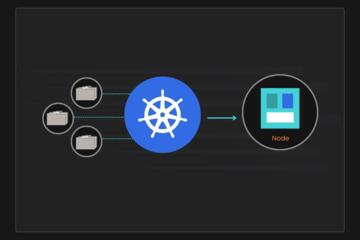
What to do: Use Docker and Kubernetes to containerize services.
-
Why it works: It abstracts the infrastructure. If a specific service needs the high-concurrency of Go, you can write that service in Go while keeping the rest of your system in Node.js.
-
Results: Companies using container orchestration report a 60% improvement in deployment frequency and significantly lower "Mean Time To Recovery" (MTTR).
Standardize on Type-Safe Languages
In a long-term codebase, documentation is never enough. The code must be self-documenting through types.
-
What to do: Use TypeScript instead of vanilla JavaScript; Kotlin or Java instead of pure Python (for large-scale backends).
-
How it looks: Large teams at Slack and Airbnb migrated to TypeScript specifically to reduce production bugs caused by type mismatches, seeing a 15% reduction in public-facing errors post-migration.
-
Tools: Integrate SonarQube for continuous code quality and Snyk for dependency vulnerability scanning.
Case Examples: Real-World Stack Decisions
Case 1: The Scalability Pivot
A mid-sized e-commerce platform initially built their backend on a Ruby on Rails monolith. As they hit 1 million monthly active users, the "Global Interpreter Lock" (GIL) caused massive latency during peak sales. Instead of a total rewrite, they moved their high-load checkout logic to Go (Golang) while keeping the admin panel in Rails.
-
Result: They reduced server costs by 40% and improved response times from 200ms to 45ms without discarding 5 years of stable code.
Case 2: Avoiding the "Hype Train"
A healthcare startup chose a "NoSQL-only" approach with MongoDB for patient records in 2018. Two years later, complex relational reporting requirements (joining tables for insurance audits) became a performance nightmare. They migrated the core data to PostgreSQL.
-
Result: Query complexity dropped by 70%, and they gained ACID compliance, which is critical for medical data integrity.
Tech Stack Comparison for Long-Term Stability
| Category | Recommended (Safe Bet) | High Risk (Trend-based) | Why? |
| Backend | Java (Spring), Python (Django), Go | Bun, Mojo | Ecosystem support vs. Alpha stability |
| Frontend | React, Next.js, Angular | Svelte, SolidJS | Talent availability and library support |
| Database | PostgreSQL, MySQL | Neo4j, CouchDB | Relational data is the 30-year standard |
| Infrastructure | AWS, Azure, GCP | Niche PaaS providers | Financial stability and compliance certs |
| Mobile | React Native, Flutter | KMP (Kotlin Multiplatform) | Community matureness and third-party plugins |
Frequent Mistakes to Avoid
-
Underestimating Migration Costs: Never assume you can "just switch databases later." Database migrations for terabyte-scale data can take months of planning. Choose a flexible relational database like PostgreSQL from day one.
-
Neglecting Documentation: Long-term projects outlive their original creators. If you don't use tools like Swagger/OpenAPI for backend docs or Storybook for frontend components, the "onboarding cost" for new devs will double every year.
-
Forgetting Security Compliance: For long-term enterprise work, ensure your stack supports SOC2 or GDPR requirements easily. Using obscure, non-vetted libraries for encryption is a liability. Stick to industry standards like OpenSSL or Bcrypt.
FAQ
1. Is it always better to choose the most popular tech stack?
Not always, but for long-term projects, popularity equals "hiring insurance." You don't want to be the only company using a dead framework in five years.
2. Should I use Microservices from the start?
No. Start with a "Modular Monolith." It’s easier to debug and deploy. Split into microservices only when your team exceeds 20–30 developers or you hit specific scaling bottlenecks.
3. How does the "Long-term" aspect affect database choice?
Relational databases (SQL) have been the gold standard for 40 years. For long-term reliability, start with SQL. You can add NoSQL (Redis, ElasticSearch) later for specific use cases like caching or full-text search.
4. When is it okay to use "Beta" technologies?
Only in non-critical, isolated services where a failure won't bring down the entire system, or if the technology solves a problem that literally no other tool can solve.
5. How often should we update our stack components?
Aim for minor updates monthly and major version upgrades once a year. Skipping two major versions (e.g., going from Node 14 to Node 20) is often more painful than incremental updates.
Author's Insight
In my 12 years of architectural consulting, I’ve seen more projects fail due to "complex tech" than "old tech." A "boring" stack like PostgreSQL, Node.js (with TypeScript), and React is often the most radical choice you can make because it allows your team to focus on the product rather than fighting the framework. My advice: Spend your "innovation tokens" on your unique business features, not on your database driver or build tool. Use the tech that everyone else is using so you can find help on Stack Overflow at 3 AM.
Actionable Strategy
To ensure your project remains viable for the next decade, conduct a "Tech Health Audit" every six months. Evaluate the community activity of your core dependencies and the ease of hiring for those roles. If a core library has not been updated in over a year, start planning its replacement immediately. Focus on building a robust CI/CD pipeline and comprehensive automated testing suite; these are the only true safeguards that allow you to evolve your tech stack without breaking your business logic.