Architecture Logic
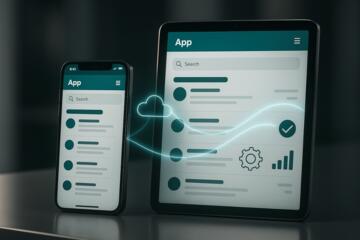
At its core, the event-driven model functions on a "push" rather than a "pull" basis. In a standard REST API environment, Service A asks Service B for data and waits. In an event-driven setup, Service A simply broadcasts that an action occurred—such as "OrderPlaced"—and any interested services react accordingly. This removes the need for services to know about each other’s existence, creating a "fire and forget" efficiency.

Consider a modern fintech platform like Revolut or PayPal. When a transaction occurs, multiple tasks must trigger: fraud detection, SMS notifications, ledger updates, and loyalty point calculations. If these were synchronous, a delay in the SMS gateway would freeze the entire transaction. With EDA, the transaction event is published to a broker like Apache Kafka, and all downstream services consume it at their own pace.
Industry data shows that moving to EDA can improve system resilience significantly. According to Gartner, organizations that adopt event-driven designs for their digital business ecosystems see a 30% increase in agility. Furthermore, Confluent reports that 80% of Fortune 100 companies now rely on Kafka to manage their real-time data pipelines, highlighting the shift from batch processing to continuous streams.
Common Pitfalls
The most frequent error in implementing EDA is treating it like a synchronous system. Developers often try to force a request-response pattern over an event bus, leading to "distributed monoliths." This happens when Service A emits an event but expects an immediate response on a different topic to continue its logic. This introduces tight temporal coupling, defeating the purpose of the architecture.
Another major pain point is the lack of idempotency. In distributed systems, network glitches are inevitable, leading to duplicate events. If your "ChargeCustomer" service isn't idempotent, a retried event could result in double billing. Without a robust strategy for handling duplicate messages, data integrity quickly degrades, leading to expensive manual reconciliations and loss of user trust.
Finally, many teams fail to implement proper observability. In a synchronous stack, a stack trace tells you exactly where a call failed. In an event-driven world, an event might vanish into a "dead letter queue" (DLQ) or fail silently in one of ten consuming services. Without distributed tracing tools like Jaeger or Honeycomb, debugging becomes a "needle in a haystack" exercise that can increase Mean Time to Repair (MTTR) by over 200%.
Strategic Implementation
Adopt a Schema Registry
To prevent breaking changes, use a Schema Registry (like Confluent Schema Registry or AWS Glue). It acts as a contract between producers and consumers. If a producer changes the event structure (e.g., changing a field from an integer to a string), the registry blocks the update if it violates compatibility rules. This ensures that downstream services don't crash when an upstream team deploys a new version.
Implement Idempotent Consumers
Every service consuming an event should check if it has already processed that specific Event ID. Use a distributed cache like Redis to store recently processed IDs. On receiving a message, the service checks Redis; if the ID exists, it acknowledges the message and does nothing. This pattern is vital for financial and inventory systems where "exactly-once" semantics are simulated through "at-least-once" delivery plus idempotency.
Utilize Dead Letter Queues
When an event fails to process after multiple retries, do not let it block the queue. Route it to a Dead Letter Queue (DLQ). Tools like RabbitMQ and Amazon SQS handle this natively. This allows the system to continue processing healthy events while developers can inspect the failed ones, fix the underlying bug, and "replay" the events back into the main stream without data loss.
Leverage Event Sourcing
Instead of just storing the current state in a database, store the entire history of events. If a user changes their email three times, you store three "EmailChanged" events. This provides a perfect audit log and allows you to "rebuild" the state of the system at any point in time. This is a game-changer for compliance-heavy industries like healthcare and banking.
Deploy Distributed Tracing
Integrate OpenTelemetry into your microservices. This allows you to attach a Trace ID to an event. As that event moves from a producer to a broker and through five different consumers, you can visualize the entire journey in a single timeline. It helps identify which specific consumer is causing latency bottlenecks or where an event chain is being interrupted.
Optimize Broker Partitioning
In tools like Kafka, performance is tied to how you partition data. Ensure you use a high-cardinality key (like UserID or OrderID) for partitioning. This ensures that events related to the same entity are processed in the correct order by the same consumer instance, preventing race conditions while allowing the system to scale horizontally across hundreds of nodes.
Practical Case Studies
A global e-commerce giant faced massive latency during Black Friday. Their monolithic checkout system crashed because the inventory service couldn't keep up with the synchronous calls from the web front-end. They migrated to an event-driven model using Amazon SNS/SQS. By decoupling the "Order Placement" from "Inventory Update" and "Shipping Label Generation," they handled a 400% spike in traffic with zero downtime. Order processing time dropped from 2.5 seconds to 150 milliseconds.
A logistics company used EDA to optimize their fleet. Each truck sent GPS and engine data every second via MQTT to a Google Cloud Pub/Sub broker. Real-time consumers calculated fuel efficiency and predicted maintenance needs. By moving from nightly batch processing to real-time events, they reduced fuel costs by 12% and prevented 15% of mechanical breakdowns through early intervention alerts sent directly to drivers' mobile apps.
Implementation Checklist
| Phase | Task Description | Key Tool/Service |
|---|---|---|
| Design | Define Event Schemas and Contracts | Avro / Protobuf |
| Infrastructure | Set up a high-availability message broker | Apache Kafka / RabbitMQ |
| Resilience | Configure Dead Letter Queues and Retries | Amazon SQS / Azure Service Bus |
| Security | Implement encryption at rest and in transit | TLS / HashiCorp Vault |
| Monitoring | Enable distributed tracing and metrics | Prometheus / Jaeger |
| Testing | Perform "Chaos Engineering" on the broker | Gremlin / Chaos Mesh |
Common Errors
One major mistake is "Event Bloat." Teams often try to put the entire database record into a single event. This consumes excessive bandwidth and makes the system sluggish. Instead, use the "Claim Check" pattern: send a small event with the ID and a link to the data, or only include the fields that actually changed. This keeps your message bus lean and fast.
Ignoring "Event Ordering" is another trap. In a distributed environment, Event B might arrive before Event A. If Event A is "CreateUser" and Event B is "UpdateUser," the consumer will fail if it processes B first. Always use sequencing keys or timestamps to ensure logical ordering, especially when using brokers that do not guarantee global ordering across all partitions.
Finally, many engineers forget about "Consumer Lag." If your consumers are slower than your producers, messages pile up in the broker. Without automated scaling (like KEDA for Kubernetes), your system will eventually run out of disk space or provide stale data to users. Monitoring the "Lag" metric is the most important health check for any event-driven system.
FAQ
How does EDA differ from Pub/Sub?
Pub/Sub is a messaging pattern, while EDA is a full architectural philosophy. Pub/Sub is often the mechanism used within EDA to broadcast events, but EDA also encompasses how data is stored (Event Sourcing) and how state is managed across the entire ecosystem.
Is EDA suitable for small applications?
Usually, no. EDA adds significant complexity in terms of deployment, testing, and debugging. For small, simple applications, a monolithic or basic synchronous REST architecture is often more cost-effective and easier to maintain until scale becomes a problem.
Can I use EDA with a SQL database?
Yes. You can use the "Transactional Outbox" pattern. Your application writes to a local SQL table and an "Outbox" table in the same transaction. A separate process then reads from the Outbox table and publishes the events. This ensures that your database and your event bus stay in perfect sync.
What is the best broker for high throughput?
Apache Kafka is the industry standard for high-throughput, persistent event streaming. If you need extremely low latency and don't care about message persistence as much, Redis Pub/Sub or NATS might be better choices. For cloud-native AWS environments, Kinesis is a strong contender.
How do I handle schema changes?
Always use backward-compatible changes (e.g., adding an optional field). If you must make a breaking change, version your topics (e.g., "orders-v1" and "orders-v2"). Keep both versions running until all consumers have migrated to the new schema, then retire the old one.
Author’s Insight
In my decade of architecting distributed systems, I have found that the biggest hurdle isn't the technology—it's the mental shift. Developers are trained to think linearly, but the real world is asynchronous. My best advice is to start small: don't move your whole company to Kafka overnight. Pick one non-critical path, like sending emails or generating reports, and move that to an event-driven model. Once you see the benefits of decoupled scaling and the power of replaying old events to fix bugs, you'll never want to go back to rigid synchronous calls.
Conclusion
Transitioning to event-driven development models allows for unprecedented system flexibility and resilience. By focusing on decoupling services, ensuring idempotency, and maintaining rigorous schema management, businesses can build platforms that handle massive loads and evolve without friction. The transition requires investment in observability and a shift in developer mindset, but the payoff in agility and performance is the foundation of modern digital success. Start by identifying your most congested synchronous bottlenecks and replace them with an asynchronous event stream today.