Popular Articles

The Role of AI in Code Optimization
Modern software development faces a critical bottleneck: the gap between rapid feature delivery and execution efficiency. This article explores how machine learning and automated reasoning transform raw source code into high-performance systems, tailored for senior developers and architects. By integrating advanced analytical tools, teams can eliminate technical debt and reduce cloud infrastructure costs by up to 40% without manual refactoring.
development

Event-Driven Development Models Explained
Event-driven architecture (EDA) shifts the software paradigm from traditional request-response cycles to a fluid stream of state changes. This model is essential for developers and architects building high-scale systems where decoupling and real-time responsiveness are non-negotiable. By leveraging asynchronous communication, organizations can eliminate bottlenecks, reduce latency, and ensure that microservices scale independently without cascading failures.
development

How to Build Secure SaaS Platforms
Building a cloud-based service today requires moving beyond simple encryption to a multi-layered security posture that protects tenant data isolation and API integrity. This guide provides CTOs and lead architects with a technical roadmap for implementing Zero Trust principles, automated compliance, and robust identity management. We address the critical tension between rapid feature deployment and the systemic risks of data breaches, offering actionable frameworks to harden your infrastructure against modern evolving threats.
development

Serverless Architecture Explained for Modern Applications
Serverless architecture represents a paradigm shift where developers focus exclusively on code while cloud providers manage the underlying execution environment. This model eliminates the friction of manual server provisioning, scaling, and patching, allowing teams to ship features faster. By utilizing event-driven triggers and granular billing, modern applications can achieve unprecedented cost efficiency and operational agility.
development

Observability in Software Development Explained
This guide explores the transition from traditional monitoring to deep system visibility, a critical shift for engineering teams managing distributed microservices. We address the challenge of "unknown unknowns" in production environments where standard alerts fail to provide context. Readers will learn how to implement a robust telemetry strategy that reduces Mean Time to Resolution (MTTR) and enhances overall architectural reliability.
development

How to Reduce Technical Debt
Technical debt is one of the most costly and often underestimated problems in modern software development. It accumulates gradually through rushed decisions, outdated architecture, and postponed refactoring, eventually slowing delivery and increasing the risk of defects. As technical debt grows, even small changes require more effort, testing, and coordination, making teams less responsive to business needs. This article explains what technical debt truly represents beyond a metaphor, why it builds up over time, and how engineering teams can reduce it in a structured, sustainable way without halting product development or sacrificing delivery speed.
development
Building AI‑Powered Applications
AI-powered applications are no longer niche experiments limited to large technology companies or research teams. Today, startups, mid-size businesses, and small development teams can build production-ready AI solutions that automate processes, personalize user experiences, and deliver measurable business impact. The real challenge is no longer gaining access to powerful AI models, but designing systems that are reliable, scalable, and easy to maintain over time. This article explores how to approach AI application development with a practical mindset, avoid common architectural pitfalls, and create AI-driven products that provide consistent value in real-world environments.
development

Managing Legacy Systems in Modern Development Environments
This guide provides a high-level technical roadmap for CTOs, senior architects, and engineering leads tasked with maintaining competitive velocity while tethered to aging codebases. We address the friction between stable monolithic foundations and the demands of cloud-native delivery, offering a blueprint for incremental modernization. By focusing on risk mitigation and ROI-driven refactoring, this article transforms the "legacy burden" into a functional asset for modern scaling.
development
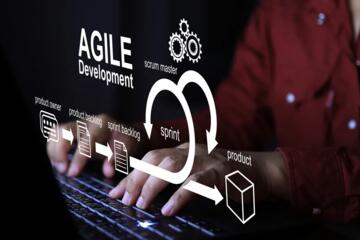
Understanding Agile Development Methodology
Agile development methodology is a flexible approach to software and product development focused on rapid delivery, continuous feedback, and adaptability to change. It is designed for teams that operate in uncertain environments where requirements evolve over time. Agile helps companies reduce wasted effort, improve product-market fit, and deliver measurable value faster. This article explains how Agile works in practice, where teams fail, and how to implement it correctly.
development

Building Secure Applications From Day One
Building secure applications from day one helps teams prevent costly vulnerabilities, reduce technical debt, and ship safer software faster. This expert guide explains how to embed security into architecture, development, and CI/CD pipelines using threat modeling, automated scanning, AI-powered tools, and real-world best practices. Learn how startups and enterprises can reduce security risks early, manage dependencies, and create scalable, secure systems without slowing delivery.
development